
News
Training on Container and Cargo Transportation Delivered by ROCB Europe under the Training Concept Framework
Within the framework of the training concept on container and cargo transportation, the Regional Office for Capacity Building for the World Customs Organization Europe Region (ROCB Europe) organized a training session combining theoretical components and a Virtual Reality (VR) programme.
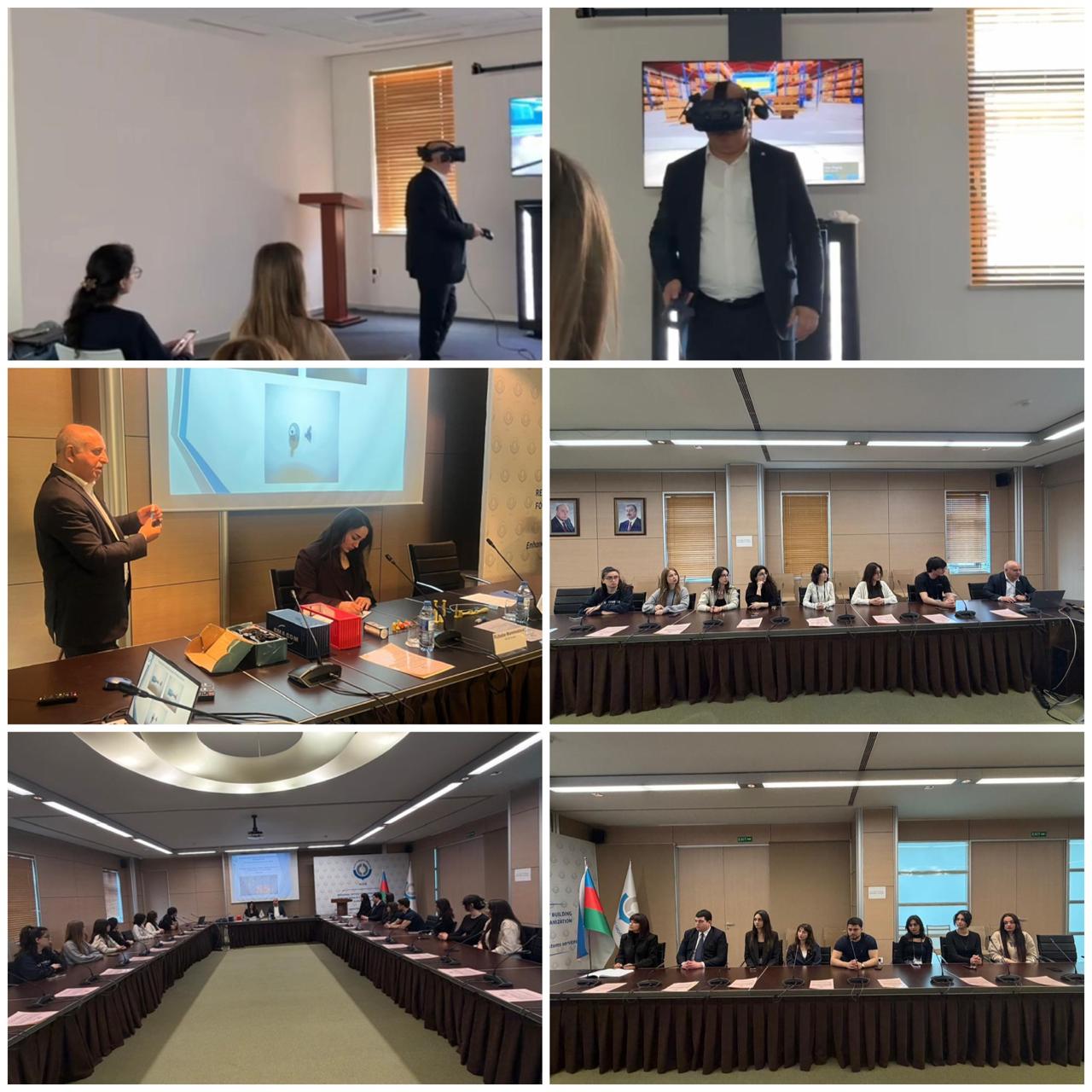
Within the framework of the training concept on container and cargo transportation, the Regional Office for Capacity Building for the World Customs Organization Europe Region (ROCB Europe) organized a training session combining theoretical components and a Virtual Reality (VR) programme.
The training was organized for students of higher education institutions undertaking internships at the office, with the aim of providing general professional knowledge in the field of customs.
Delivered by a relevant field expert of the Office, the training covered key aspects of customs control in container and cargo transportation.
Structured in three phases (theoretical, VR, and practical), the first part of the training focused on “Containers, their types, classifications, identification, structure, and marking related to dangerous goods.” In this context, participants were provided with detailed information on the technical characteristics of containers, classification principles in line with international standards, and proper marking requirements for dangerous goods.
The subsequent presentation addressed “Concealment methods in containers, interference with customs seals and locking mechanisms, and illegal manipulations involving containers.” This part placed particular emphasis on risk identification, detection of unlawful interference, and preventive measures, offering practical approaches for participants.
In addition, within the framework of the training, a presentation was delivered under the World Customs Organization’s Virtual Reality Training (VRT) Programme. Using VR equipment installed at the ROCB Europe office, the expert demonstrated a training simulator focused on customs control of cargo transported by road and air.
Through the application of VR technology, participants were introduced to more effective and interactive methods of learning customs control procedures in container and cargo transportation. It was emphasized that the WCO Virtual Reality Training Programme enhances the effectiveness of practical application in real working environments.
The implementation of such initiatives by ROCB Europe makes a significant contribution to strengthening customs control in the region, promoting the use of modern technologies, and developing human resources.